GZbohangzhineng@163.com
+86-18675873677



When evaluating a Bottle Blowing Machine for your manufacturing line, understanding the unit production rate — how many bottles the machine can produce in a given time — is essential for planning capacity, cost, and return on investment. This article explains unit production rates clearly and provides reference benchmarks based on industry norms, then highlights how BOHANG’s machines fit into modern production needs.
The unit production rate refers to the number of finished bottles that a blow Molding machine can produce per hour under normal working conditions. It is one of the most important factors in assessing machine performance.
A general formula often used to estimate production capacity is:
Production Capacity (bottles/hour) = (3600 / Cycle Time in Seconds) × Number of Cavities
This reflects how many complete bottle blowing cycles a machine can perform in an hour, and how many bottles it produces per cycle.
Different models and machine configurations will have varying production capacities. Here are common output ranges based on machine size and type:
| Machine Type | Description | Typical Hourly Output |
|---|---|---|
| Small-Scale Machines | 1–2 cavities, basic automation | 300–1,500 bottles/hour |
| Medium-Scale Machines | 3–6 cavities for standard production needs | 1,500–6,000 bottles/hour |
| Large & High-Speed Systems | Multiple cavities, advanced automation | 6,000–15,000+ bottles/hour based on configuration |
| High-Performance Industrial Lines | Rotary or high-cavity configurations | 15,000–30,000 bottles/hour in some industrial systems |
These ranges illustrate that as automation and cavity count increase, so does the output capacity. Production rates are also influenced by bottle size, wall thickness, material type, and cycle optimization.
Even with rated outputs, actual performance depends on several factors including:
Cycle Time: Shorter cycles increase bottles produced per hour.
Cavity Number: More cavities mean more bottles per machine cycle.
Bottle Size & Shape: Larger or complex shapes take longer to form.
Automation Level: Fully automated systems minimize downtime between cycles.
Preform Heating Efficiency: Uniform heating shortens the process without compromising quality.
These variables determine how a machine performs in your specific production environment and product specification.
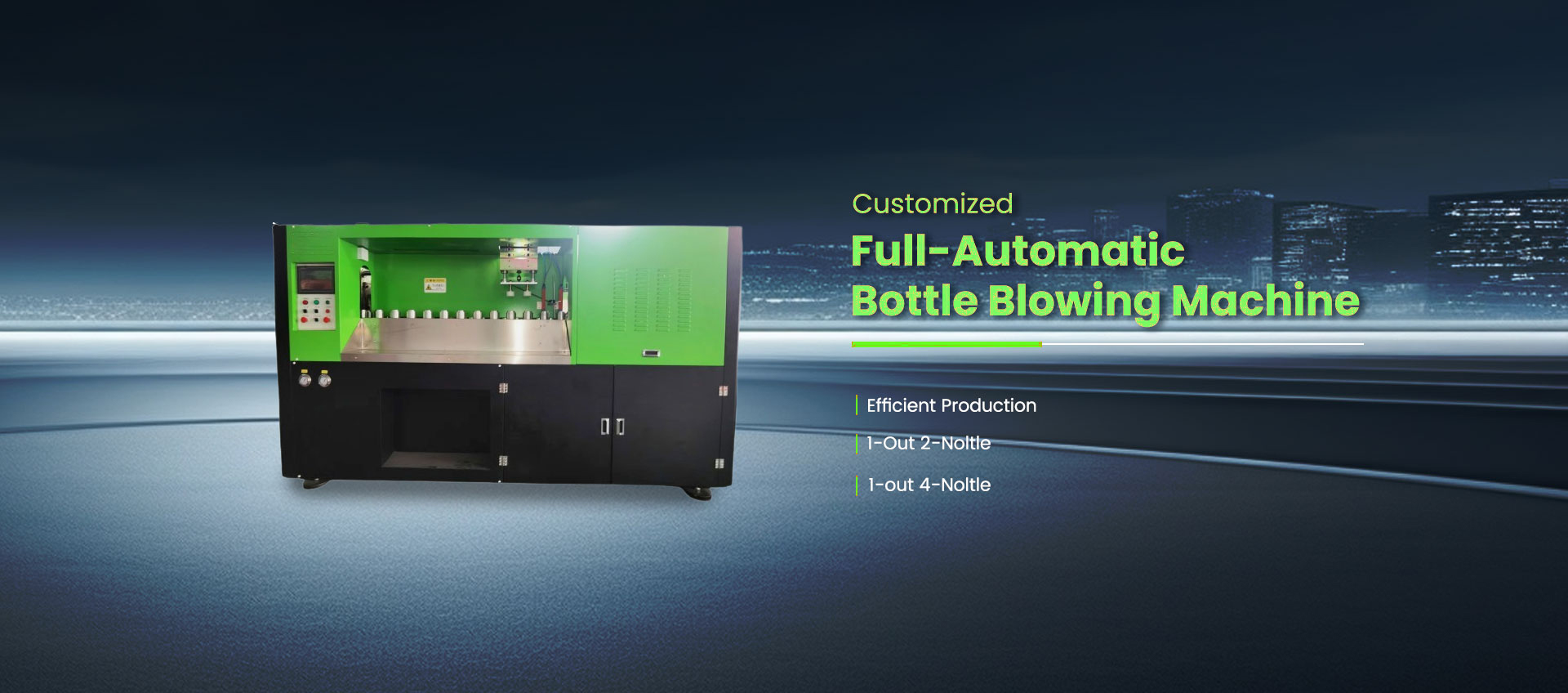
BOHANG is a reputable manufacturer of advanced bottle blowing machines that cater to a range of production demands, from small batches to larger industrial lines. Their machines leverage cutting-edge technology for stable, high-output production.
BOHANG’s lineup includes fully automatic, semi-automatic, and plastic bottle blowing machines that are engineered to offer:
High production speeds suitable for competitive manufacturing.
Efficient, energy-saving systems to improve cost-effectiveness.
Automated controls and PLC systems for consistent output with minimal human intervention.
While exact hourly outputs depend on specific models and bottle specifications, machines in this class generally fall within or exceed the industry production ranges noted above.
Choosing a machine with a high unit production rate can provide several benefits:
Greater Throughput: Meet large order volumes and shorten lead times.
Lower Unit Costs: High output spreads operational expenses over more units.
Flexibility: Machines that handle various bottle sizes support product diversification.
Scalability: High-speed machines support growth as demand increases.
When selecting a bottle blowing machine based on unit production rate:
Assess your demand forecast to determine required hourly throughput.
Evaluate bottle specifications (size, material, design).
Consider automation level to balance labor costs and output consistency.
Confirm energy and maintenance costs relative to projected production.
BOHANG provides a wide range of machine models and customization options to help manufacturers match production capacity with business goals.
The unit production rate of a bottle blowing machine is a key performance metric that directly impacts manufacturing efficiency and profitability. Typical machines produce from a few hundred up to tens of thousands of bottles per hour depending on design, automation, and application. BOHANG’s bottle blowing machines are engineered for dependable high-volume output, making them suitable for diverse production requirements.
For reliable performance and strong production capacity, consider exploring BOHANG’s bottle blowing machine offerings to find a solution that aligns with your manufacturing needs.