GZbohangzhineng@163.com
+86-18675873677



The global market for PET bottle blow-Molding machines continues to grow steadily. One recent analysis estimates that the PET bottle blow molding machine market was valued at around USD 10.33 billion in 2024 and could reach USD 14.22 billion by 2034. Another source projects overall Bottle Blowing Machines (including PET) to grow from about USD 9.39 billion in 2024 to USD 15.29 billion by 2035.
This growth is driven by ongoing demand from beverage, food, pharmaceutical, personal care, and household-chemicals industries — all of which increasingly rely on PET bottles for their balance of strength, clarity, lightweight, and recyclability.
With this expanding market, equipment manufacturers are pushing innovations to meet evolving industrial needs, offering greater automation, efficiency, material flexibility, and environmental friendliness.
Modern PET blow-molding lines are integrating automation and intelligent manufacturing features. Smart controls, real-time monitoring, sensor-based quality checks, and automated mold change systems are becoming more common.
The key benefit is more stable, predictable production — fewer manual interventions, consistent quality, and minimized downtime. Faster mold switching, for instance, reduces the time lost between production batches, enabling manufacturers to adapt quickly to changing product demands.
Energy consumption and materials efficiency are now central metrics for modern blow-molding equipment. Many machines employ optimized servo-motor drives, efficient heating systems (such as infrared or other advanced preform heating), closed-loop air compressors, and improved insulation to reduce energy waste.
These improvements reduce operational costs per bottle and help companies meet sustainability goals. At the same time, better process control and reduced scrap translate to lower production losses and more predictable yield — a major competitive advantage.
There is growing demand for sustainable “green packaging.” As part of this, equipment is being adapted to handle preforms with high content of recycled PET (rPET). At the same time, lightweight bottle designs (thinner walls, optimized geometry) are more popular — reducing material usage and transportation cost per bottle.
However, working with rPET or thinner-walled bottles demands more precise control over heating, stretching, and blowing processes, to avoid defects such as wall thinning, structural weakness, or surface imperfections. This in turn motivates machine improvements in terms of precision temperature control, uniform stretching, and improved molding consistency.
Originally, pet bottle blowing machines were mainly used for beverage containers. But today, demand comes from a broader set of industries: from bottled water and soft drinks to pharmaceuticals, personal care, cosmetics, chemicals, and even household-cleaning products.
This diversification pushes equipment makers to design more flexible machines — capable of producing bottles of various sizes, shapes, and wall thicknesses, often with decorative or ergonomic molds (for premium personal-care or cosmetic bottles), or child-proof closures (for pharmaceuticals).
In practice, modern blow-molding lines often support quick mold changeovers — enabling one machine to run multiple SKUs (stock-keeping units) with minimal downtime and lower tooling costs.
Although demand is rising, the industry faces several challenges that also drive innovation:
Raw material volatility: PET resin prices fluctuate with global crude oil and supply-chain disruptions, which impact manufacturing cost.
Environmental and regulatory pressure: As consumers and regulators increasingly demand sustainable packaging, manufacturers must ensure recyclability, minimize waste, and ideally incorporate recycled content — which often requires upgrading older machines.
Investment cost and maintenance burden: Advanced machines with energy-efficient systems, smart controls, and flexible molds often require higher upfront capital, and maintenance costs may be higher — which can be a significant hurdle for small to mid-size producers.
These challenges create incentive for manufacturers to adopt newer machines that are more efficient, flexible, and sustainable — especially as the global push toward a circular economy strengthens.
Given current trends and pressures in the PET bottle industry, companies investing in blow-molding equipment should prioritize the following features:
Fully automated or semi-automated lines with digital control systems, sensors, and real-time monitoring for consistent quality and high throughput.
Energy-efficient components: servo-driven motors, optimized heating (infrared or similar), closed-loop air systems, and good insulation.
Flexibility: fast mold-change capability; support for different bottle sizes/shapes; ability to handle rPET preforms and produce lightweight bottles.
Precision and process stability: uniform heating, accurate stretching/blowing, good cycle-to-cycle consistency to minimize defects — particularly important when using recycled materials or producing thin-wall bottles.
Scalability: machines that can grow with production demand, adapt to different bottle types and volumes, with manageable maintenance and upgrade paths.
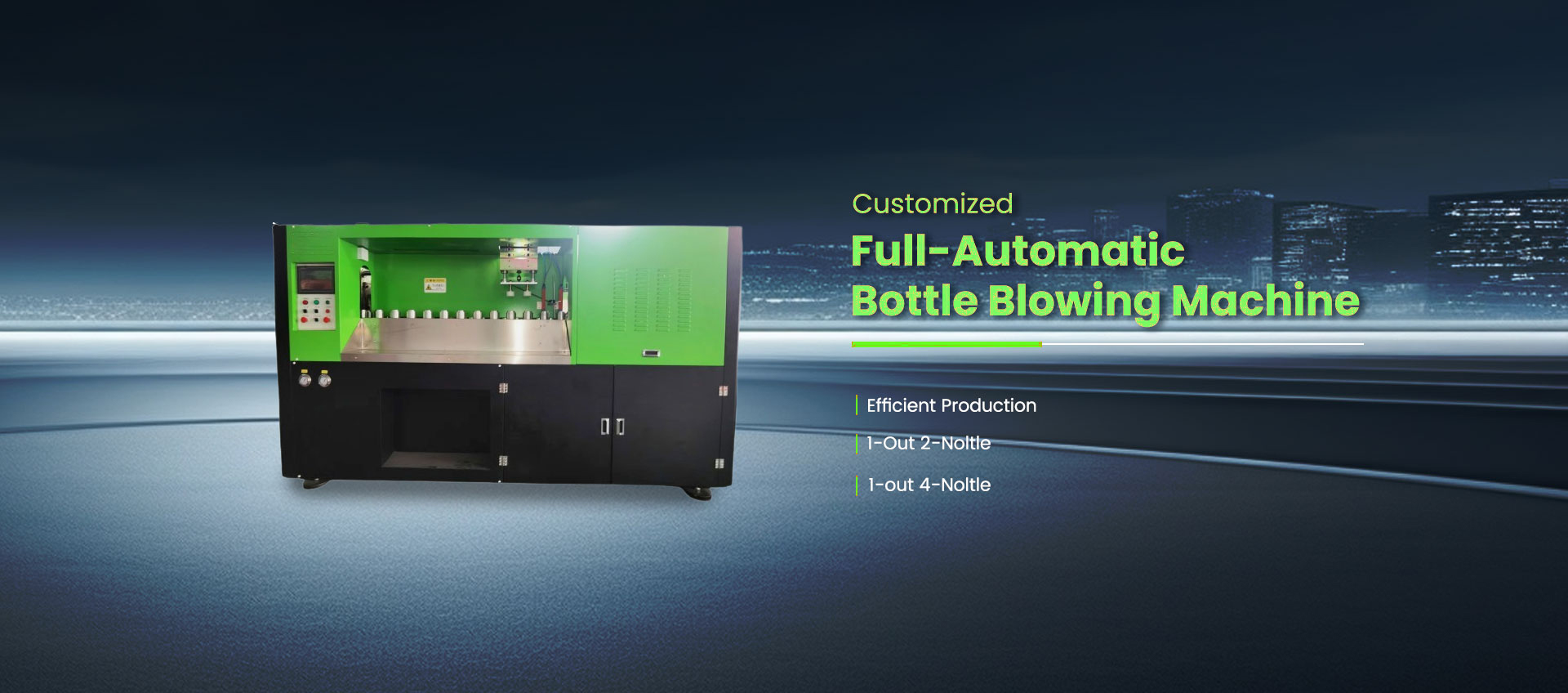
If you are evaluating suppliers of PET blow-molding machines, BOHANG is worth paying attention to. Their latest announcement outlines exactly the modern trends: automation & smart manufacturing, energy efficiency, resource conservation, and strong support for recycled materials and lightweight bottle production. (BOHANG)
Choosing a supplier like BOHANG can help you stay aligned with evolving market demands — enabling efficient, sustainable production with flexibility for different bottle types and materials.
Whether you produce beverages, personal-care products, or chemicals, investing in a modern machine from a forward-looking manufacturer like BOHANG can help future-proof your production line.
The PET bottle blowing equipment market is evolving rapidly under multiple pressures: increasing demand for bottled packaging, cost and resource constraints, regulatory and environmental concerns, and diversification of bottle applications.
To stay competitive and sustainable, manufacturers are increasingly leaning toward highly automated, energy-efficient, flexible machines — capable of producing recyclable or lightweight bottles with minimal waste and high precision.
For those looking to invest, modern equipment from suppliers such as BOHANG offers a compelling mix of automation, sustainability, and flexibility — aligning with current and future industry trends.
Given the continued growth of global demand and the rising emphasis on circular-economy packaging, now is an important time to consider upgrading to advanced PET blow-molding solutions.