GZbohangzhineng@163.com
+86-18675873677



Stable bottle output is not created by one strong component or one fast cycle. It comes from a full production system where heating, air pressure, mold accuracy, motion control, and maintenance work together every hour of the day. In bottle manufacturing, even a small drift in temperature or positioning can lead to wall thickness variation, deformation, higher scrap, and line stoppages. That is why buyers evaluating a bottle machine should look beyond speed alone and focus on how to ensure stable bottle production over the long term. BOHANG builds its bottle blowing solutions around this idea, combining servo control, fast PLC response, automated monitoring, and modular machine design to support continuous output quality across different bottle formats.
Factories usually begin with the most basic question: can the machine repeat the same action thousands of times without drifting? In PET bottle blowing, consistency depends on accurate heating, stable stretch and blow action, and repeatable mold closing. The U.S. FDA notes that packaging systems require controls that ensure consistency in components and limit unintended variation in manufacturing procedures. In practical production, that means the machine must keep critical parameters stable rather than relying on operator experience alone.
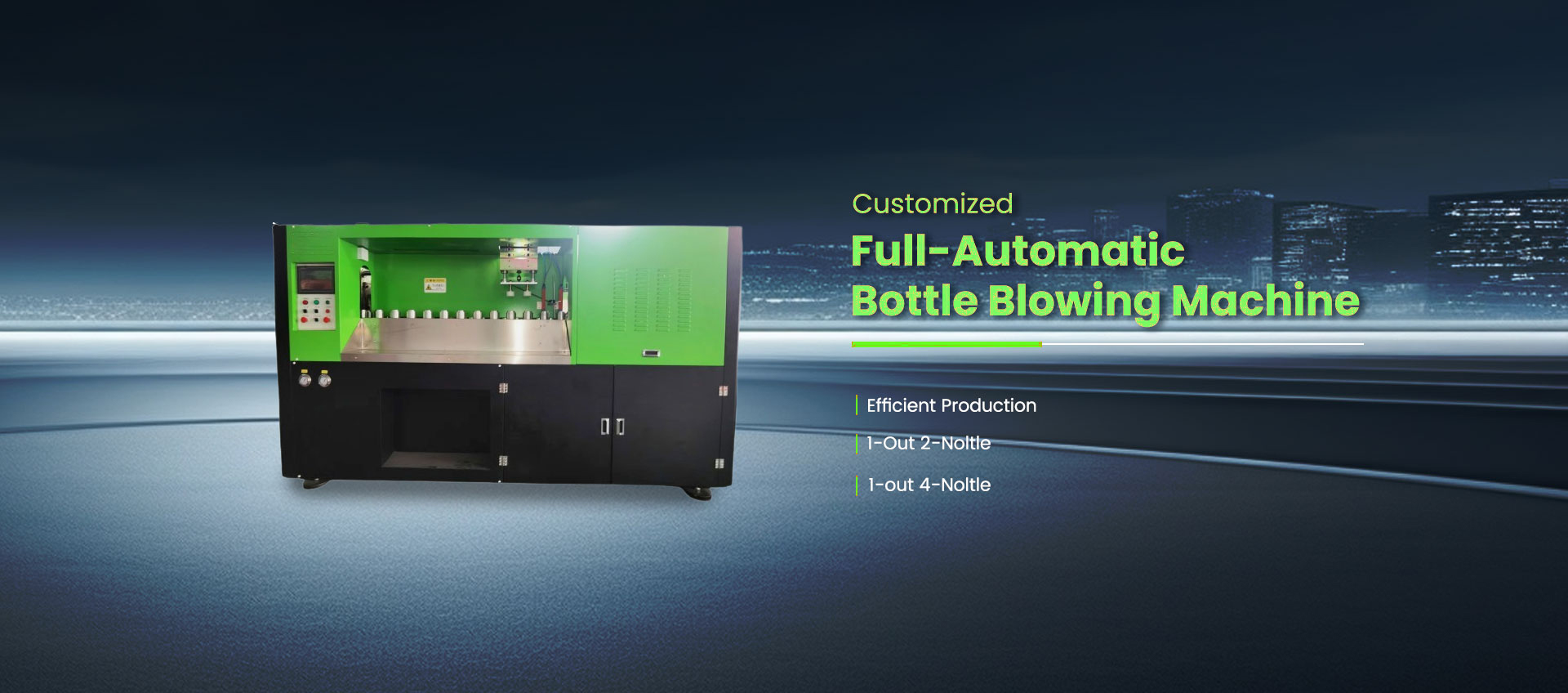
BOHANG highlights this control logic in its bottle blowing range through servo motors, fast PLC systems, and automated controls designed for consistent high-quality bottle production. On its plastic Bottle Blowing Machine page, BOHANG also states that the equipment uses an intelligent control system for full-process automated production, with compatibility across PET, PP, and PE bottle applications from 50 ml to 5 L. That flexibility matters because stable output is harder to maintain when a line has to switch between multiple bottle sizes and materials.
A bottle machine can only be as stable as the mold system it runs with. ISO 20457 defines tolerances for plastic moulded parts and gives a framework for dimensional control in molded products. For factories, that matters because neck finish accuracy, parting line control, and cavity consistency all affect whether bottles seal properly, fill correctly, and travel smoothly on downstream lines.
BOHANG connects machine design with this dimensional discipline. Its product information states that closed-loop pressure control and precision mold positioning can keep wall-thickness uniformity error within 0.1 mm, while product qualification rate can exceed 99.5 percent under the right setup. It also says the machine supports mold change within 10 minutes and stores up to 50 sets of process data in a parameter library. For factories handling multiple SKUs, fast and repeatable changeover is a major part of true machine stability, because instability often appears during product switching rather than during steady-state production.
Many factories create instability by selecting either too little capacity or too much. An undersized machine creates bottlenecks and pushes operators to run at the limit. An oversized machine often increases energy waste and creates unnecessary process fluctuation at lower utilization. BOHANG’s guidance for PET blow molding equipment gives a useful reference range: semi-automatic systems typically run at 500 to 2,000 bottles per hour, automatic systems at 3,000 to 8,000 bottles per hour, and high-speed linear systems above 8,000 bottles per hour.
This is where a manufacturer’s engineering support becomes valuable. BOHANG does not position the machine as a stand-alone unit only. Its site presents bottle blowing machines together with molds, Manipulators, and related automation, which is important because line balance affects stability just as much as the blowing station itself. A well-matched system avoids upstream preform interruption and downstream handling delays, both of which increase defect risk.
Short-term output can look good during commissioning, but long-term reliability depends on structural design and maintenance discipline. NIST identifies preventive, reactive, and predictive maintenance as the main machinery maintenance strategies, and notes that predictive maintenance uses observed data such as temperature, vibration, and noise to anticipate failure. For bottle plants, that means stability is not only about performance today but also about how early the machine shows warning signs before downtime happens.
BOHANG emphasizes the same logic on its product page. It states that core components use alloy steel with heat treatment, key bearings can exceed 50,000 hours of life, and a fully enclosed lubrication system helps reduce contamination and maintenance cost. The page also notes a maintenance cost reduction of 40 percent and 24-hour continuous operation under low failure conditions. These numbers matter because downtime in bottle production is rarely isolated. One machine stop can disrupt filling, labeling, packing, and shipment schedules across the plant.
| Control Area | Why It Matters | BOHANG Example |
|---|---|---|
| Heating and pressure control | Reduces bottle deformation and wall variation | Intelligent control and closed-loop pressure control |
| Mold precision | Supports neck finish accuracy and repeatable dimensions | Precision mold positioning and modular mold design |
| Capacity matching | Prevents overload or wasted energy | 500 to 8,000 plus BPH range depending on machine type |
| Maintenance planning | Lowers unplanned downtime risk | Enclosed lubrication and long-life bearings |
| Changeover repeatability | Keeps multi-SKU production stable | 10-minute mold change and 50 recipe sets |
Factories often treat energy saving as a separate purchasing issue, but it also supports stability. BOHANG notes that its servo-driven plastic bottle blowing machine can reduce energy consumption by 30 percent compared with traditional models. Its PET machine guidance also notes that stretch blow molding systems can account for more than 60 percent of total energy use in a bottling plant, and that older systems can be improved significantly by better machine design and control. More stable heating and air management do not only cut cost. They also improve repeatability from shift to shift.
This is especially relevant when buyers compare new industrial equipment with legacy lines. Lower energy fluctuation often means more stable thermal behavior, which helps both bottle appearance and downstream filling performance. In many cases, better energy control and better quality control come from the same engineering decisions.
Even a technically strong machine can become unstable if spare parts, setup guidance, and service response are weak. BOHANG presents fast delivery, quality assurance, and after-sales support as part of its offer, and its product structure shows a broader focus on bottle blowing, molds, Packing Machines, and manipulators rather than a single isolated product. That gives buyers a clearer path for system matching, process tuning, spare parts planning, and future expansion.
A factory that truly values stability will usually review four areas before making a purchase decision: control system response, mold accuracy, component life, and service readiness. Those four areas are more useful than headline speed alone when comparing suppliers or planning expansion. They are also the foundation of meaningful durability testing in real production conditions, where uptime, scrap rate, and repeatability matter more than brochure claims.
Factories ensure stability in bottle production machines by controlling the full process rather than focusing on one feature. Accurate heating, precise molds, stable motion control, planned maintenance, fast changeover, and engineering support all contribute to better bottle consistency and less downtime. BOHANG’s approach combines automated control, modular design, broad bottle compatibility, and long-life core components to help manufacturers run more stable bottle lines with fewer interruptions. For buyers comparing equipment, the smartest question is not only how fast the machine can run, but how consistently it can deliver the same result day after day.
Previous: