GZbohangzhineng@163.com
+86-18675873677



PET bottle production is more than heating plastic and blowing it into shape. A stable PET bottle manufacturing process starts with resin control, moves through preform injection and reheating, and ends with stretch blow Molding, inspection, filling, and packing. For buyers, the real concern is not only bottle shape, but also wall thickness consistency, top-load strength, transparency, leakage risk, and long-run production stability. PET is widely used because it is clear, durable, lightweight, and recyclable, and PET bottles have been used in food, beverage, personal care, and household packaging since the 1970s.
The full process of bottle manufacturing usually begins with PET resin pellets made from purified terephthalic acid and ethylene glycol. Those pellets are dried, melted, and injection molded into preforms. The preforms are then reheated, stretched, and blown into the final bottle shape with compressed air. According to the NIH environmental review of PET water bottles, bottle fabrication typically uses injection molding for the tube-like preform and stretch blow molding for the final bottle. The same review notes that 1 kilogram of PET resin can produce about 0.877 kilogram of finished 500 mL bottles, or roughly 33.7 to 65.94 bottles depending on bottle weight.
Drying is one of the most critical bottle production steps. PET is hygroscopic, which means it absorbs moisture from the air. If the resin is processed with excessive moisture, hydrolysis can reduce molecular weight and lead to haze, brittleness, or weak bottle performance. A peer-reviewed review on recycled PET reports that residual moisture for molded PET parts should be below 0.02 percent. The APR PET laboratory processing guidance also specifies drying PET to less than 50 ppm before extrusion tests, showing how tightly moisture is controlled in quality processing.
After drying, PET resin is plasticized and injected into a preform mold. At this stage, the neck finish is already formed, which is why thread precision and dimensional accuracy matter so much. Any defect in preform weight, gate quality, or neck geometry will carry into the finished bottle. In practical factory operation, good preform quality reduces later rejection rates and improves blowing consistency, especially on fast-running lines that need repeatable output shift after shift.
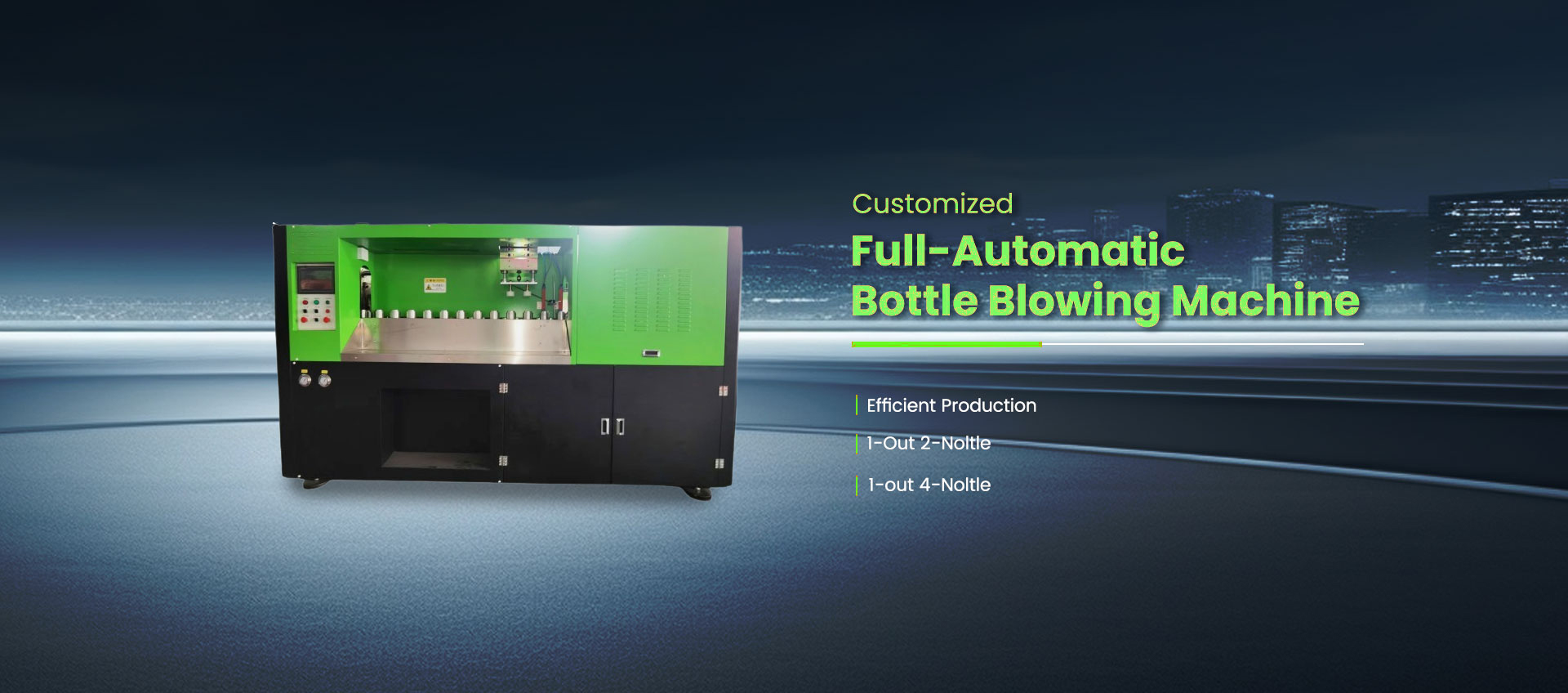
The reheated preform enters the blow station, where it is stretched lengthwise and expanded radially with high-pressure air. This is the heart of the PET bottle manufacturing process because it determines final bottle geometry, clarity, and mechanical strength. BOHANG describes PET bottle blowing systems as equipment that transforms preforms into hollow containers through thermoplastic molding technology, and its machine structure integrates mechanical, hydraulic, pneumatic, and intelligent control technologies for automatic operation from raw material heating to finished bottle output. That kind of system integration matters because buyers often need more than a standalone machine. They need steady coordination between heating, clamping, stretch rods, air routing, and downstream automation.
Once bottles are formed, they are cooled, ejected, and checked for dimensional accuracy, visual defects, sealing performance, and handling strength. This part of the full process of bottle manufacturing is where many hidden costs appear. A bottle that looks acceptable can still fail under load, deform during hot filling, or create instability on labeling and packing equipment. That is why a dependable plastic production line needs inspection logic built around the bottle’s real use environment, not just its appearance.
For procurement teams, the biggest risk is not buying a bottle machine. The real risk is buying unstable output. Moisture variation, uneven heating, poor stretch ratio, and weak mold precision can all create quality drift. The NIH review estimates bottle fabrication energy at about 8.388 to 20 MJ per kilogram of bottle, which shows why scrap reduction and process efficiency directly affect cost control. On the materials side, PET also remains attractive because recycling systems for beverage bottles are expanding. UNESDA reported that in Europe the sorted-for-recycling rate for PET beverage bottles reached 75 percent in 2022, while rPET pellet production capacity from flakes doubled to 1.4 million tonnes.
| Stage | Main task | Why it matters |
|---|---|---|
| Resin drying | Remove moisture from PET pellets | Protects clarity and mechanical strength |
| Preform injection | Form the bottle neck and body blank | Determines dimensional consistency |
| Reheating | Bring preform to the right forming condition | Affects wall thickness distribution |
| Stretch blow molding | Expand preform into final bottle | Shapes bottle strength and appearance |
| Inspection and packing | Check quality and prepare shipment | Reduces downstream rejection risk |
For manufacturers planning a new line or upgrading capacity, machine selection has a direct impact on bottle consistency and operating cost. BOHANG focuses on semi-automatic and fully automatic PET bottle blowing solutions, along with mold and automation support. Its published product information highlights energy-efficient system design, flexible configurations for different bottle sizes and industries, stable continuous operation, and integrated solutions across the plastic packaging machinery process. In other words, BOHANG is positioned not only as a machine supplier, but as a partner that understands the connection between process stability and production results.
The PET bottle manufacturing process begins with dry, controlled resin and ends with a bottle that must run reliably through filling, labeling, transport, and retail handling. Each stage, from preform injection to final blowing, affects quality, waste rate, energy use, and delivery performance. When evaluating equipment for a plastic production line, it is worth focusing on control accuracy, automation matching, and long-run stability rather than only headline output. BOHANG’s combination of bottle blowing equipment, mold support, and integrated production thinking makes it relevant for companies that need dependable bottle production steps and scalable results. For a more suitable machine configuration based on bottle size, output target, and factory conditions, you are welcome to send your production requirements for discussion.
Previous: