GZbohangzhineng@163.com
+86-18675873677



PET bottle production looks simple from the outside, yet the quality of the final container depends on tight control of heat, moisture, air pressure, stretching behavior, and Mold cooling. In practical manufacturing, PET bottle blow molding is not just about inflating a preform into shape. It is a coordinated system that links material preparation, heating balance, mold design, pressure control, and post-forming stability into one repeatable workflow. BOHANG focuses on this workflow with bottle blowing equipment, supporting tooling, and process-oriented project planning built for stable output and efficient bottle changeover.
PET has become a mainstream bottle material because it combines clarity, light weight, impact resistance, and strong processing efficiency. It also supports continuous improvement in sustainability. According to NAPCOR, the US PET bottle collection rate reached 33 percent in 2023, the highest level in decades, while average recycled PET content in US bottles and jars rose to 16.2 percent. For packaging producers, this gives PET both commercial value and long-term relevance in modern container programs.
From a production standpoint, PET also responds well to stretch blow molding. When the preform is heated correctly and stretched in two directions during blowing, the material develops the bottle volume, clarity, and wall structure needed for beverage, personal care, and household packaging. Research published in Procedia CIRP notes that the injection stretch blow molding route depends on preheated preforms, controlled stretching, and blowing conditions that directly affect final wall thickness distribution. That is why the blow molding process must be managed as a precision forming operation rather than a simple inflation step.
Understanding how PET bottles are made step by step helps buyers evaluate equipment capability more accurately. In most industrial lines, the production route includes material drying, preform preparation, reheating, stretching and blowing, cooling, inspection, and packing.
PET is highly sensitive to moisture before processing. If the resin carries too much water, hydrolysis can reduce molecular strength and create haze, bubbles, brittleness, or weak spots in the bottle. Industry references used in PET quality control show that PET resin is typically dried to below 50 ppm moisture before processing. ASTM D7191 also identifies moisture as a critical factor because excess water can damage processability and surface quality. In other words, drying is not a secondary step in the PET process. It is one of the foundations of bottle consistency.
A PET bottle does not begin as a loose tube inside the blowing machine. It begins as a preform with a finished neck, controlled weight, and defined wall mass ready for redistribution. In a two-stage production route, preforms are injection molded first and then transferred to a stretch blow machine for reheating and forming. This separation allows better flexibility for bottle families, output planning, and mold changes across multiple SKUs.
Before blowing, preforms are reheated to a controlled temperature window so the body can stretch while the neck remains dimensionally stable. BOHANG notes that standard PET bottle blowing commonly works in a range of about 90 to 120 degrees Celsius, while hotter filling applications may need higher thermal settings. Heating uniformity matters because uneven temperature can lead to poor material distribution, unstable bases, whitening, or distorted shoulders. Reliable machine heating zones and feedback control help prevent those issues during the plastic forming process.
Once reheated, the preform enters the mold. A stretch rod extends the material longitudinally, then compressed air expands it radially against the mold cavity. This biaxial orientation is the heart of PET bottle blow molding. The ScienceDirect study on 1.5 liter PET bottles showed that stretch rod speed from 0.6 to 0.8 meters per second and preblowing pressure from 0.4 to 1.6 MPa can significantly change wall thickness distribution. That means bottle strength, top-load behavior, and appearance depend on more than mold shape alone. Machine settings must match bottle geometry.
After expansion, the mold removes heat from the bottle wall and stabilizes its final dimensions. Cooling uniformity affects gloss, shrink behavior, cycle time, and repeatability. BOHANG highlights mold designs that prioritize cooling balance and venting strategy, because bottle appearance consistency and stable production are closely tied to heat removal efficiency. For manufacturers running multiple bottle sizes, this is one of the areas where machine and mold coordination has a direct impact on daily output.
The last stage is inspection and packing. Manufacturers commonly verify bottle weight, wall distribution, neck finish stability, leak resistance, and visual clarity. Moisture control, heating consistency, and blowing parameters all show up in the final inspection result. When this control loop is strong, scrap rates are lower and changeovers are easier to manage across different bottle designs.
The table below shows the production variables that have the biggest influence on finished bottle performance.
| Process stage | Key control point | Typical risk if unmanaged | Production impact |
|---|---|---|---|
| Resin drying | Moisture below 50 ppm | Haze, bubbles, brittleness | More rejects and weaker bottles |
| Preform quality | Stable weight and wall balance | Uneven stretching | Poor bottle distribution |
| Reheating | Uniform body temperature | Whitening, distortion, poor clarity | Unstable forming result |
| Stretching | Rod speed matched to design | Thick base or thin sidewall zones | Lower mechanical reliability |
| Air blowing | Preblow and final blow pressure | Incomplete forming or wall imbalance | More variation between cavities |
| Mold cooling | Uniform heat removal and venting | Sink marks, poor appearance, longer cycle | Lower line efficiency |
The values and risks above reflect common PET control principles documented in ASTM moisture testing guidance, PET moisture control references, and injection stretch blow molding research.
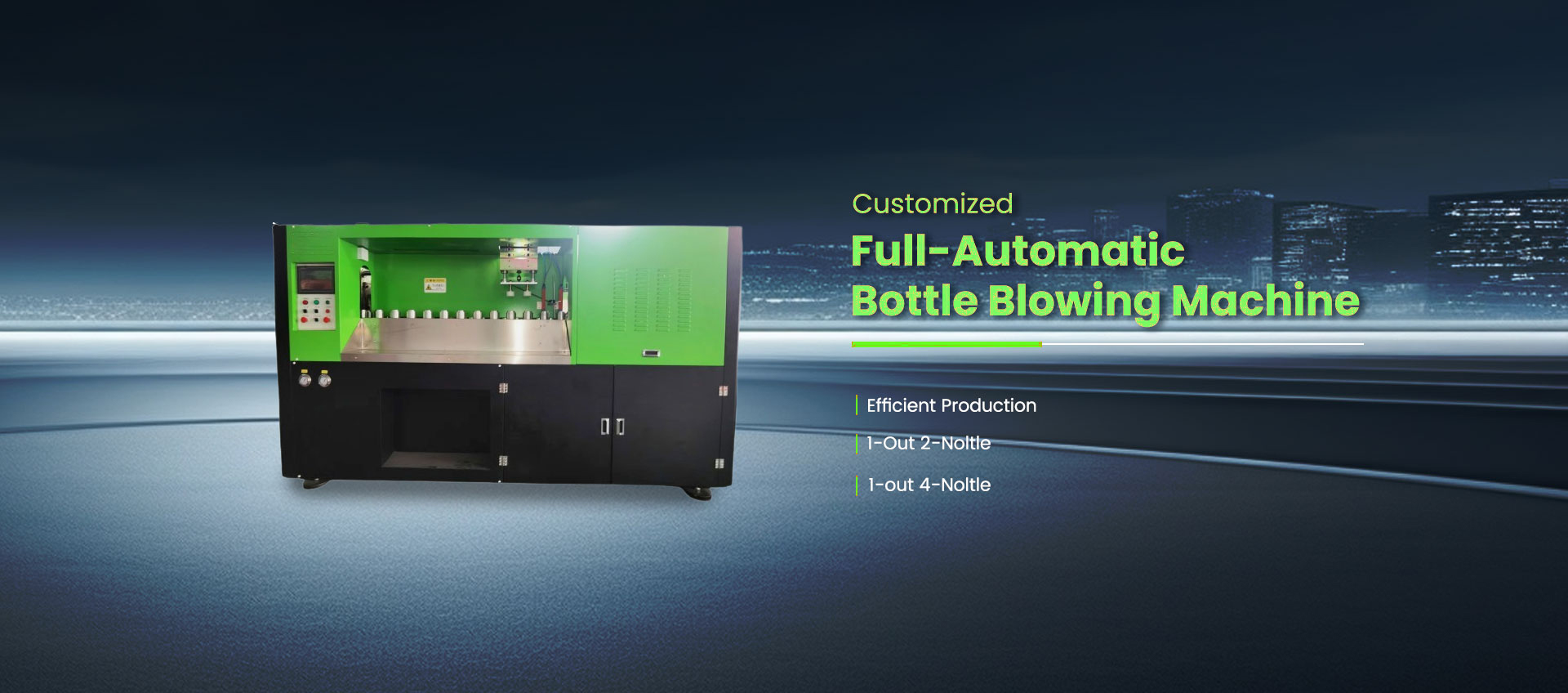
In real factory operation, the blow molding process is a balance between speed and control. BOHANG states that its Bottle Blowing Machine range is used for PET bottles of different shapes and sizes, with typical production capacity depending on model and ranging from about 1,000 to 10,000 bottles per hour. That production span matters because not every project needs the same line architecture. Small-batch development, pilot production, and frequent bottle changes may benefit from semi-automatic systems, while high-volume standard bottle programs often require a fully automatic setup with more stable cycle management.
This is also where supplier capability becomes important. BOHANG positions its strengths around independent production workshops, product development teams, bottle blowing equipment, and project-oriented tooling support. For buyers, this matters because machine selection is rarely only about headline speed. It is also about whether heating, blowing, mold cooling, and bottle geometry can work together reliably over time. BOHANG’s approach to mold review, cooling strategy, and trial validation supports that broader production goal.
A weak bottle is often traced back to process imbalance rather than raw material alone. Excess moisture can lead to brittleness and visual defects. Uneven reheating can cause the shoulder or base to deform. Incorrect preblow pressure can move too much material into one zone and leave another too thin. Poor venting or cooling can reduce appearance consistency and extend cycle time. These are not isolated machine problems. They are system problems across the full PET process.
Manufacturers reduce these risks by controlling moisture before molding, standardizing preform inputs, using stable heating layouts, validating stretch and blowing parameters during trials, and designing molds for serviceability as well as shape accuracy. BOHANG specifically emphasizes wear-zone insert planning, cooling uniformity, and process-oriented mold review, which are practical measures for keeping output predictable across long production runs.
For a buyer evaluating a bottle line, the real question is not only how a bottle is formed, but how repeatably it can be formed at commercial scale. The answer depends on whether the equipment supplier understands the complete plastic forming process from preform behavior to mold cooling. A machine may look fast on paper, yet still struggle with heating balance, cavity consistency, mold maintenance, or bottle design transfer if the system is not engineered as a whole.
BOHANG’s equipment portfolio covers semi-automatic and fully automatic PET bottle blowing solutions, along with supporting mold and automation resources. That combination is valuable for projects that need practical scaling, stable repeatability, and technical coordination during bottle development. Whether the target is water bottles, juice bottles, cosmetic containers, or other PET packaging, the core success factor remains the same: precise control over each stage of how PET bottles are made step by step.
PET bottle forming works by turning a carefully prepared preform into a finished container through controlled reheating, stretching, blowing, and cooling. The science behind it is straightforward, yet the production result depends on disciplined execution. Moisture must be low, temperature must be uniform, stretching must be matched to bottle design, and the mold must remove heat efficiently. When those elements are aligned, PET bottle blow molding delivers clear, lightweight, high-output packaging with dependable quality. For manufacturers building stable container programs, that is where BOHANG’s machine capability and process-focused support create real production value.