GZbohangzhineng@163.com
+86-18675873677



The Bottle Blowing Machine is a critical part of modern plastic packaging production, responsible for shaping PET preforms into bottles used in beverages, pharmaceuticals, cosmetics, and household products. Depending on production capacity and automation level, manufacturers typically choose between automatic and semi-automatic blowing machines. Understanding their differences helps investors and engineers select the most suitable system for their plant’s size, budget, and operational strategy.
A pet bottle blowing machine transforms PET preforms into finished bottles through a process of heating, stretching, and air-blowing inside a Mold cavity. The equipment’s performance directly affects bottle quality, production efficiency, and cost control.
Bohang Machine offers both automatic and semi-automatic systems, integrating advanced control technologies and durable components for consistent bottle clarity, strength, and uniformity.
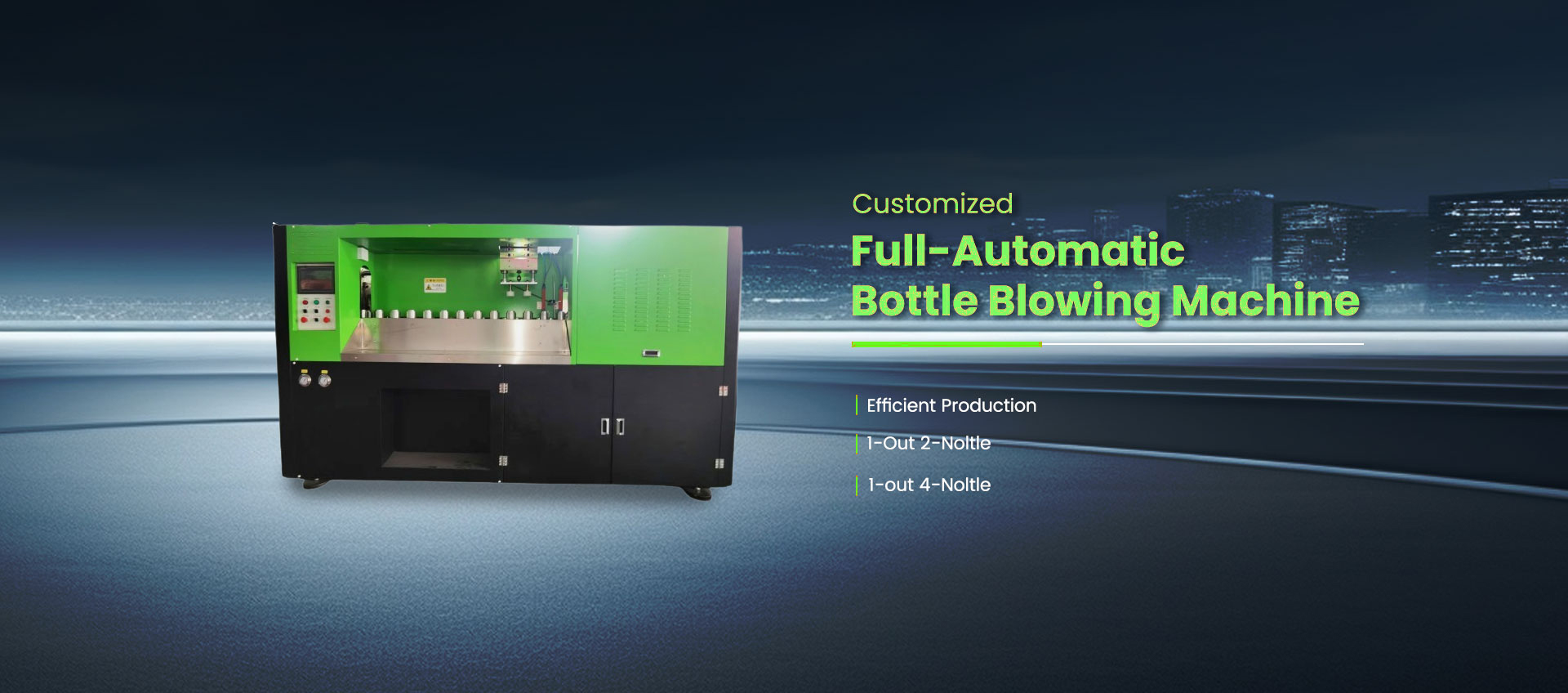
An Automatic PET Bottle Blowing Machine integrates all stages of production — preform loading, heating, blowing, and ejection — within a single automated cycle. Once the parameters are set, it requires minimal operator intervention.
Key features include:
Fully integrated operation: Robotic arms and conveyors handle preform feeding and finished bottle discharge.
High production speed: Typically produces 1,000 – 6,000 bottles per hour per cavity, depending on model.
Precision control: Equipped with PLC control systems and temperature sensors for consistent heating.
Reduced labor demand: One operator can manage multiple lines simultaneously.
Energy optimization: Infrared heating and air-recycling reduce power consumption.
| Advantage | Description |
|---|---|
| Efficiency | Continuous production with minimal downtime, ideal for large-scale factories. |
| Consistency | Precise control of pressure and temperature ensures uniform bottle thickness. |
| Labor Savings | Automation significantly reduces manpower and handling errors. |
| Hygiene & Safety | Closed-loop process minimizes contamination in food or beverage packaging. |
| Adaptability | Quick mold change capability supports various bottle designs. |
Automatic machines are best suited for:
Large beverage manufacturers (water, juice, carbonated drinks)
Cosmetic bottle production lines
High-volume pharmaceutical packaging
Industrial chemical containers requiring uniform wall thickness
A semi-automatic PET bottle blowing machine divides the production process into two main parts: preform heating and bottle blowing. Operators manually transfer heated preforms into the blow mold for shaping.
Key features include:
Manual transfer between heating oven and blowing station
Lower investment cost compared to automatic models
Compact structure, suitable for small workshops
Flexible operation with easy maintenance
Production rate ranging from 600 – 1,500 bottles per hour, depending on configuration
| Advantage | Description |
|---|---|
| Cost-Effective | Lower purchase and maintenance costs make it ideal for startups. |
| Operational Control | Operators can manually adjust heating or blowing cycles based on experience. |
| Space Saving | Requires less installation space and infrastructure. |
| Simple Maintenance | Fewer mechanical parts reduce technical complexity. |
| Suitable for Diverse Shapes | Useful for custom bottles and trial production. |
Semi-automatic machines are ideal for:
Small to medium-scale bottling plants
Specialty beverage or cosmetic brands with multiple bottle types
Research and development facilities testing new bottle designs
Low-volume or seasonal production lines
| Comparison Criteria | Automatic Machine | Semi-Automatic Machine |
|---|---|---|
| Operation Mode | Fully automated from preform loading to ejection | Requires manual transfer between heating and blowing |
| Labor Requirement | 1 – 2 operators per line | 2 – 4 operators per line |
| Production Capacity | 2,000 – 12,000 bottles/hour | 600 – 1,500 bottles/hour |
| Energy Consumption | Optimized with heat recovery and servo systems | Moderate, depends on operator efficiency |
| Precision Control | PLC & touchscreen interface | Manual or simple electronic controls |
| Investment Cost | Higher initial investment | Lower initial investment |
| Maintenance Complexity | Requires skilled technicians | Easier routine maintenance |
| Target Users | Large-scale factories | Small or startup manufacturers |
Choosing between automatic and semi-automatic PET bottle blowing machines depends on several operational factors:
Production Volume – If your daily demand exceeds 20,000 bottles, automatic models ensure efficiency.
Budget Planning – Semi-automatic systems are ideal for new entrants or small-scale producers.
Manpower Availability – Automated systems save labor costs, while semi-automatic ones offer flexibility.
Product Diversity – Semi-automatic models support small batches and varied designs, whereas automatic machines favor uniform, high-volume runs.
Factory Layout – Automatic systems require more floor space for conveyors and robotic arms.
Bohang Machine assists clients in evaluating these parameters, offering tailored configurations for optimal cost-performance balance.
Both machine types require preventive maintenance to ensure long-term stability:
Regular cleaning of heating lamps and cooling systems
Inspection of air compressors, stretch rods, and molds
Periodic calibration of temperature and pressure controls
Timely lubrication of moving parts to reduce wear
Automatic machines typically feature diagnostic systems and alarms that alert operators to anomalies, while semi-automatic machines rely on operator vigilance.
Both automatic and semi-automatic bottle blowing machines play indispensable roles in PET packaging production.
For large manufacturers focusing on speed, hygiene, and consistency, the automatic system is the superior choice.
For smaller factories or custom bottle projects, the semi-automatic model offers flexibility and lower investment.
By integrating advanced automation, energy-saving technology, and durable mechanical design, Bohang Machine delivers reliable PET bottle blowing solutions for all production scales, helping clients achieve high efficiency, reduced waste, and enhanced profitability.