GZbohangzhineng@163.com
+86-18675873677



A PET Bottle Blowing Machine is core industrial equipment used to manufacture hollow plastic bottles, especially those made from polyethylene terephthalate (PET). These machines are widely employed in beverage, pharmaceutical, personal care, and food packaging industries due to their efficiency, precision, and capacity to produce large volumes of consistent, high-quality bottles.
PET blow molding is a thermoforming process that transforms a solid plastic preform into a finished bottle through heat, pressure, and mold shaping. The preform resembles a thick tube with a defined neck finish, which becomes the bottle’s mouth. Inside the blow molding machine, this preform is heated and expanded to the full bottle shape by applying pressurized air in a closed mold.
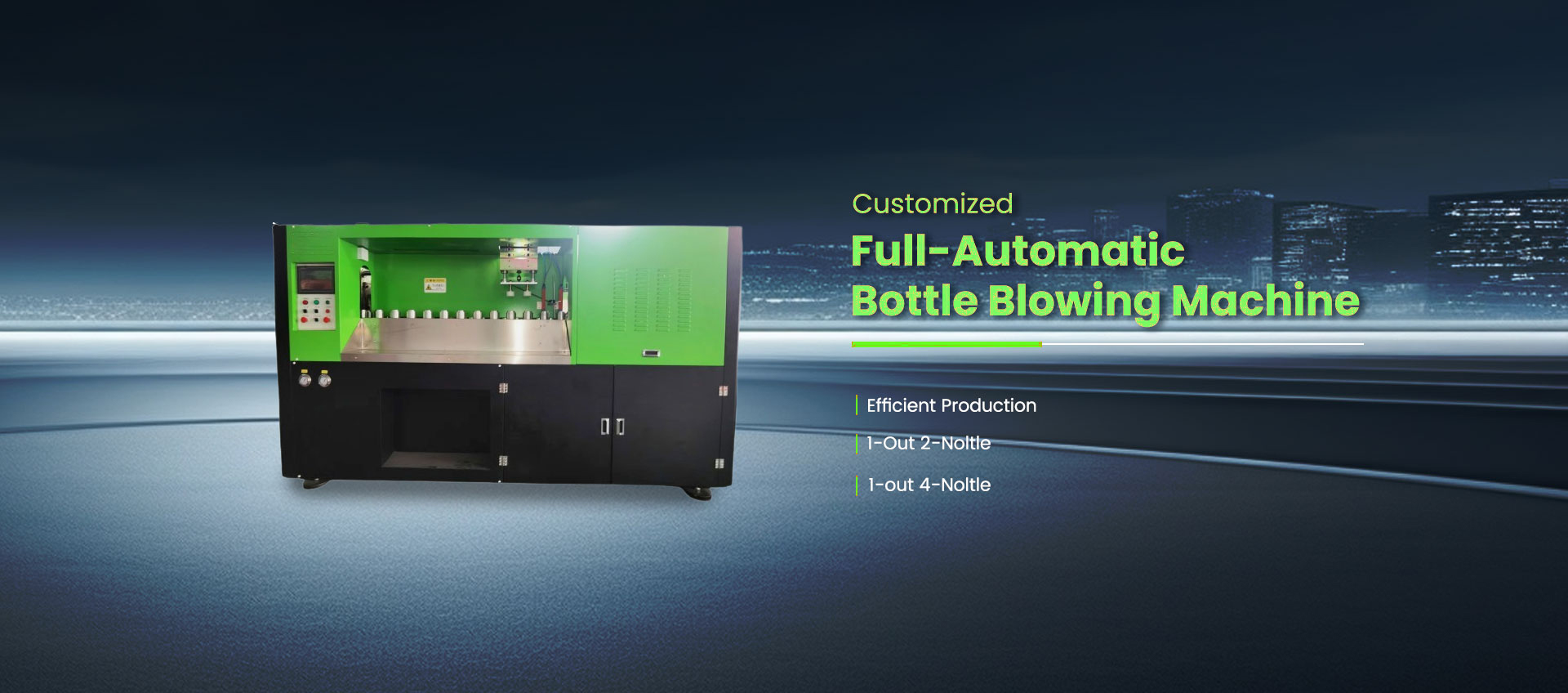
BOHANG’s pet bottle blowing machines are designed with automated systems that control heating, molding, blowing, cooling, and ejection for efficient production. Models range from fully automatic systems for high-volume lines to semi-automatic systems suitable for small-batch production while maintaining precision and stability.
The working process can be divided into several essential stages:
PET preforms, produced by injection molding or supplied ready-made, are loaded into the machine’s heating section. Preforms are arranged on a conveyor or robotic loader for uniform heating.
Preforms pass through a heating tunnel equipped with infrared heaters or other heat sources. At this stage, the PET material approaches the appropriate temperature range for molding, ensuring it becomes soft and stretchable without deforming the neck finish.
After heating, preforms enter the blow molding station where a mold closes around them. Compressed air is forced inside the soft PET to expand and conform to the mold’s internal shape. Many machines also use a stretch rod to draw the preform downward, improving molecular orientation and strength of the bottle walls.
Once the PET has been blown into the desired shape, cooling begins immediately. Mold cooling channels and air management systems quickly solidify the plastic so the bottle retains its form. Proper cooling safeguards dimensional stability and bottle clarity.
After sufficient cooling, the blow mold opens and the finished bottle is ejected. A conveyor or robotic system transfers bottles for trimming, inspection, or further processing such as labeling or filling.
| Component | Function |
|---|---|
| Preform Loader | Feeds preforms into the heating section systematically. |
| Heating Oven | Applies controlled heat to soften the PET preform. |
| Blow Molding Station | Clamps the mold and applies high-pressure air for shaping. |
| Stretch Rod Assembly | Stretches the PET preform for improved strength and uniformity. |
| Cooling System | Confirms the bottle’s shape through rapid cooling. |
| Control System | Integrates automation, timing, and process monitoring. |
Each component is calibrated to maintain consistent bottle quality and production efficiency. Advanced control systems provide real-time adjustment of temperature, pressure, and timing parameters to match specific bottle designs and production rates.
PET bottle blowing machines vary by automation level and production method:
Fully Automatic Machines: Provide high throughput with minimal operator intervention. Ideal for large scale beverage and packaging plants.
Semi-Automatic Systems: Cost-effective solutions for smaller operations where full automation is not necessary.
There are also distinctions between one-step and two-step blow molding systems. In a two-step process, preforms are made separately and then blown, while in a one-step system both preform formation and bottle blowing occur within the same machine.
PET Bottle Blowing Machines are widely used across industries that require high volumes of plastic bottles, including:
Beverage production lines (water, soft drinks, juices)
Pharmaceutical and medical packaging
Household cleaning product containers
Personal care and cosmetics bottles
Food and condiment containers
This versatility makes PET blow molding equipment a pillar of modern packaging manufacturing.
PET blow molding equipment delivers several manufacturing benefits:
High production speed and consistency
Ability to produce complex bottle shapes
Lightweight bottles with high mechanical strength
Energy efficiency with optimized heating and cooling cycles
Flexible operation adaptable to various bottle sizes
Modern PET bottle blowing machines from established manufacturers like BOHANG incorporate robust mechanical design and advanced controls to support sustainable and scalable production.